

Observation using a Microscopes is critical when looking at objects that cannot be seen by the human eye. Compound microscopes and stereo microscopes are two types that exist. Their uses differ from one another, as does their design and functionality. This paper analyzes their advantages and disadvantages.
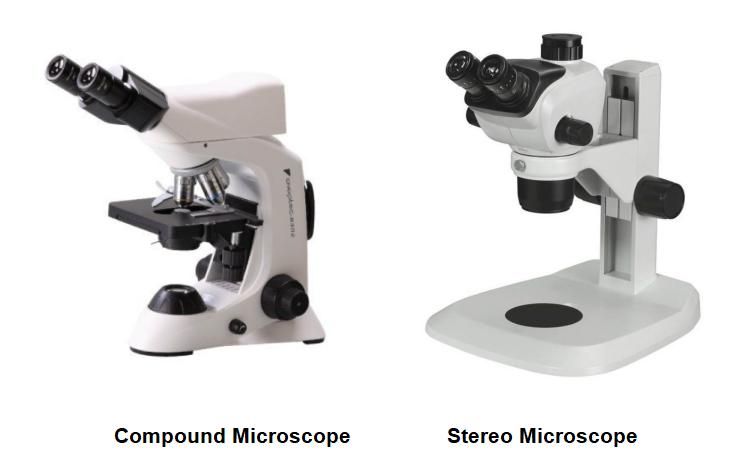
Compound Microscopes
The compound microscope is an optical device that employs several lenses to attain high magnifications (40x to 1000x+). It has a lens placed close to the object to be observed and another lens used for observation. It is tailored to view small, transparent objects like cells, bacteria, and tissue sections.
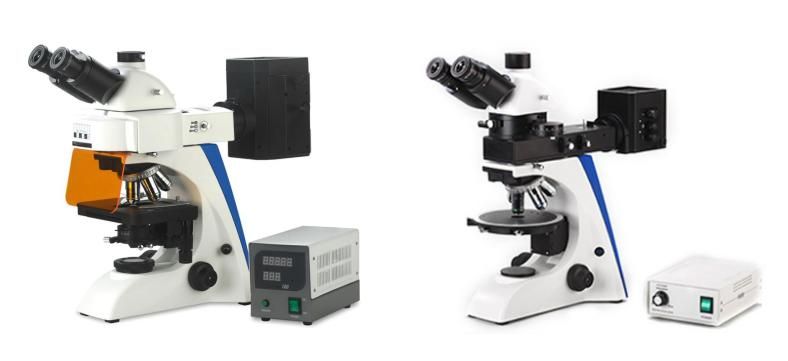
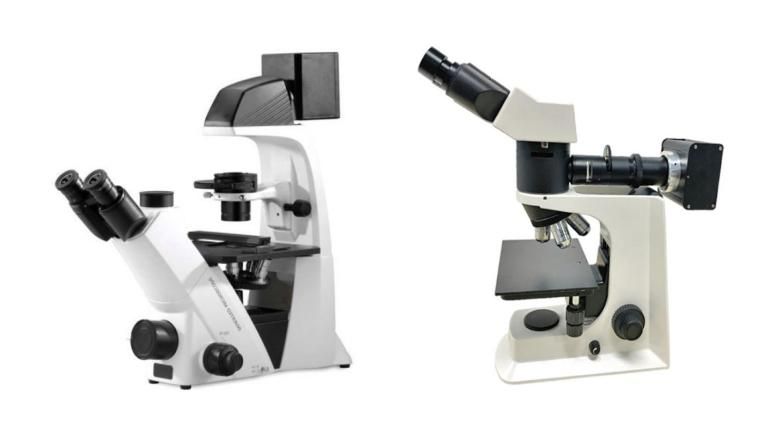
Compound microscopes come in various types, each designed for specific applications and offering different features. Here are the main types of compound microscopes:
| Compound Microscopes Type | Key Mechanism / Design | Primary Applications |
| Fluorescence Microscopes | Uses high-intensity light to excite dyes/proteins; filters isolate emitted light. | The light source is above the stage, and objectives are below; views specimens from underneath. |
| Polarizing Microscopes | Uses polarized light, polarizers, and analyzers to examine birefringent specimens. | Mineralogy, crystallography, materials science. |
| Inverted Microscopes | Molecular biology, immunology, and medical diagnostics. | Cell culture, live cell imaging, petri dish/flask observation. |
| Metallurgical Microscopes | Uses reflected light to examine the surface of opaque specimens. | Education, documentation, and digital imaging fields. |
| Digital Microscopes | Equipped with cameras to capture images/videos for computer analysis and sharing. | The light source is above the stage, and the objectives are below; views specimens from underneath. |
Compound Microscopes: Pros and Cons
Pros
- High Magnification: Achieves 40x to 1000x+ magnification, enabling detailed study of cells, bacteria, and micro-structures.
- Superior Resolution: Multiple lenses provide high-resolution images, allowing users to distinguish between two closely positioned points.
- Versatile Applications: A fundamental tool across biology, medicine, and materials science for research, diagnostics, and education.
- Enhanced Clarity: Features like adjustable diaphragms, fine focus, and built-in lighting ensure crisp and high-quality imaging.
Cons
- Limited Depth of Field: High magnification results in a shallow focus range, making it difficult to view thick specimens or 3D structures.
- Complex Preparation: Specimens often require time-consuming preparation, such as staining, sectioning, or mounting on slides.
- Cost and Complexity: Advanced models are expensive and often require specialized training and practice to operate effectively.
- Fragility and Maintenance: Delicate components require careful handling, regular maintenance, and a dedicated workspace due to their bulk.
Understanding these pros and cons helps in making informed decisions when selecting a compound microscope for specific applications and ensuring that it meets the requirements of the tasks at hand.
Stereo Microscopes
A stereo microscope (dissecting microscope) is an optical device that allows viewing large specimens at low magnification.
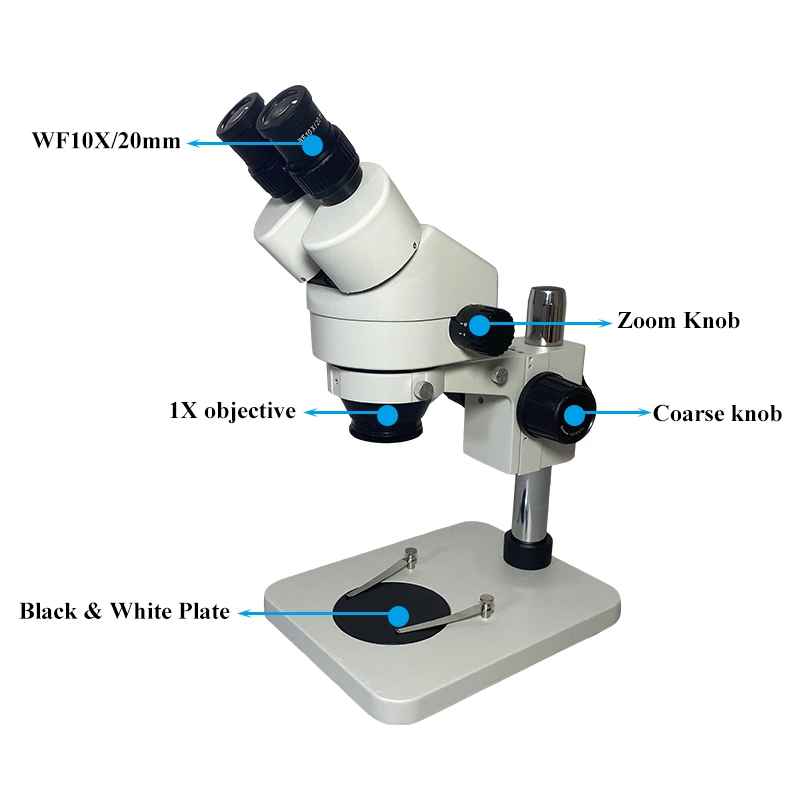
Main Feature
- Magnification: Generally lies between 10x and 50x.
- Optical Paths: Utilizes two different optical paths to achieve depth perception and produce a 3D image.
- Specimen: Suitable for viewing relatively larger specimens, such as insects, plants, and computer parts.
Stereo Microscope: Pros and Cons
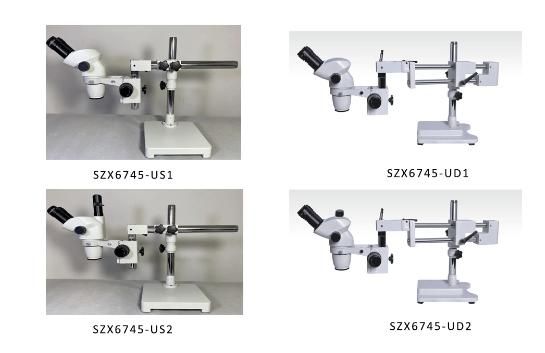
Pros
- 3D Visualization: Provides excellent depth perception and a three-dimensional perspective, essential for manipulating and examining physical objects.
- Large Working Distance: Offers significant space between the lens and the specimen, allowing for easy handling, dissection, or assembly.
- Greater Depth of Field: Keeps more of a thick or uneven specimen in focus at once compared to compound microscopes.
- Ease of Use: Straightforward operation with minimal specimen preparation, making it ideal for routine inspections and education.
- Versatility and Durability: Highly effective for botany, electronics, and quality control; typically built with a robust design for frequent handling.
Cons
- Lower Magnification: Typically limited to 10x to 50x, making it unsuitable for viewing tiny details like individual cells or bacteria.
- Specimen Limitations: Designed for larger, opaque objects; not effective for thin, transparent slides or microorganisms.
- Limited Resolution: Lower power means it cannot resolve the fine internal structures visible under a compound microscope.
- Fewer Advanced Features: Generally lacks specialized contrast techniques like fluorescence or phase contrast found in high-end lab microscopes.
- Bulky Design: Can be large and cumbersome, requiring more bench space and careful storage.
Understanding these pros and cons can help you determine whether a stereo microscope is the right tool for your specific needs and applications, ensuring you select the most appropriate equipment for your tasks.
Compound vs Stereo Microscopes: What are the differences?
Here is a form sheet that provides a clear comparison of the uses and characteristics of compound and stereo microscopes:
| Aspect | Compound Microscopes | Stereo Microscopes |
| Magnification Range | 40x to 1000x or more | 10x to 50x |
| Specimen Type | Small, thin, and transparent specimens (e.g., cells, bacteria, tissue sections) | Larger, solid, and three-dimensional specimens (e.g., insects, plants, electronic components) |
| Field of View | Smaller field of view | Larger field of view |
| Depth of Field | Shallow depth of field | Greater depth of field |
| 3D Visualization | No | Yes |
| Working Distance | Short working distance | Large working distance |
| Specimen Preparation | Often requires preparation (e.g., staining, sectioning) | Minimal preparation, can observe specimens directly |
| Portability | Generally less portable, can be bulky | Generally more robust and easier to handle |
| Cost Considerations | Basic models are affordable; advanced models can be expensive | Basic models are affordable; specialized models can be more expensive |
| Ease of Use | Requires training and practice | Generally straightforward to use |
For different applications, they also have some differences:
| Common Applications | Compound Microscopes | Stereo Microscopes |
| Applications in Biology | Studying cells, microorganisms, and tissue sections | Dissecting specimens, examining larger biological samples |
| Applications in Medicine | Diagnostic work, examining blood smears and tissue biopsies | Surgical procedures, examining larger medical specimens |
| Applications in Industry | Materials analysis, quality control, research in materials science | Materials analysis, quality control, and research in materials science |
| Applications in Education | Learning about cellular structures and microorganisms | Exploring larger specimens, hands-on activities |
Compound vs. Stereo Microscopes: How to Choose?
The best microscope for you depends on the type of specimen you want to observe. Here’s a quick guide:
- For very small objects and high magnification: Choose a compound microscope.
- For larger objects with 3D detail and manipulation: Choose a stereo microscope.
In some cases, having both types of microscopes can be extremely beneficial for a wider range of investigations.
ScopeLab offers an extensive range of microscopes, including compound, stereo, digital, and specialized models, catering to diverse fields such as biology, medicine, material science, and education. If you are not sure how to choose the microscope, please feel free to contact them.