

Compound vs Stereo Microscopes: What is the Difference?
- Compound microscopes unlock the invisible—the building blocks of life.
- Stereo microscopes reveal the miniature, the hidden details of the physical world.
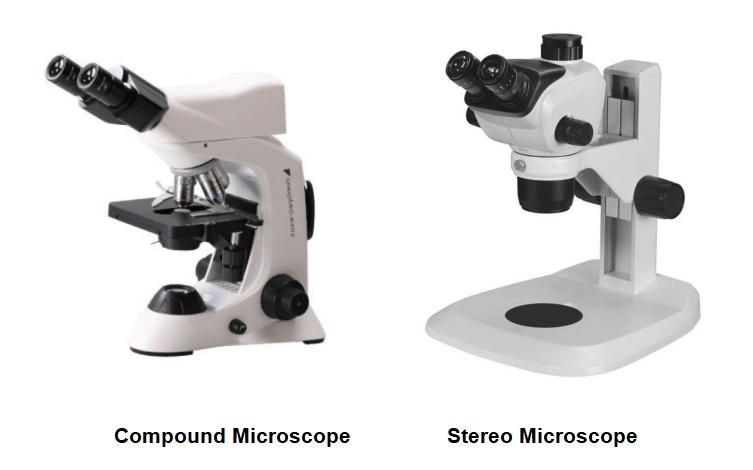
| Feature | Compound Microscope | Stereo Microscope |
| Magnification | High (40x–1000x+) | Low (10x–50x) |
| Image Type | 2D (Flat) | 3D (Depth) |
| Working Distance | Very Small (mm) | Large (cm) |
| Best For | Bacteria, Cells, Yeast | Insects, PCB Repair, Coins |
| Light Direction | From Bottom | From Top/Side |
1. The Compound Microscope: The Window to Cells
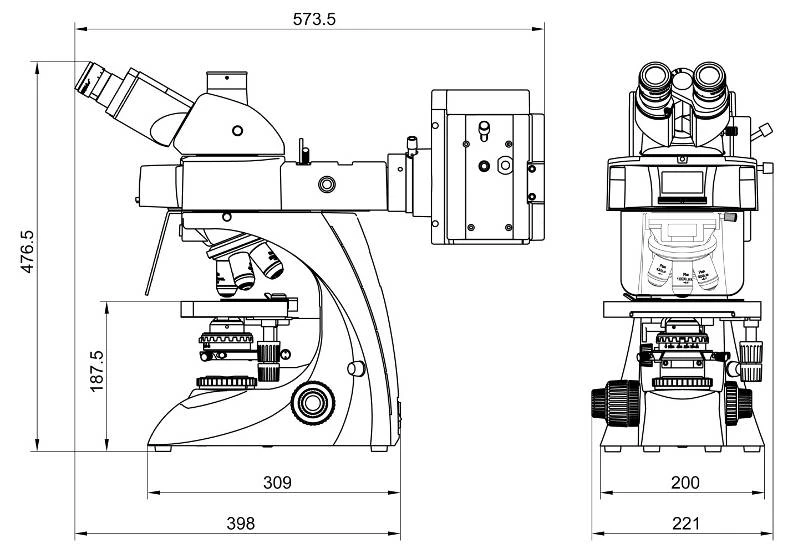
Fluorescence Microscope 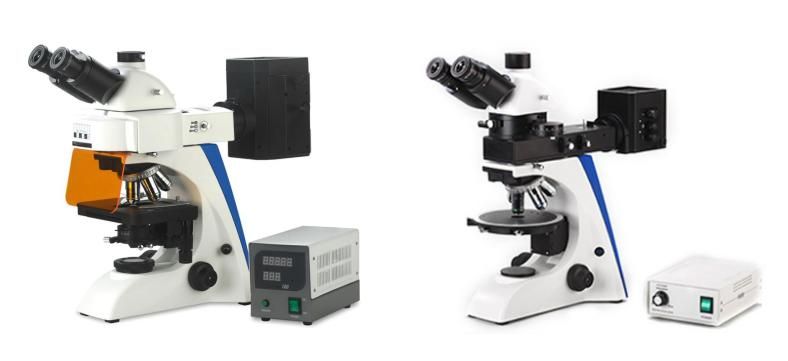
Fluorescence Microscopes 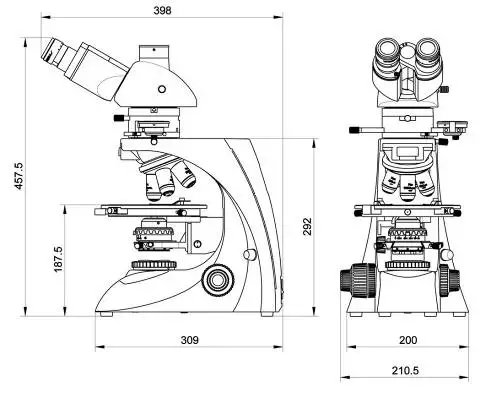
Polarizing Microscope 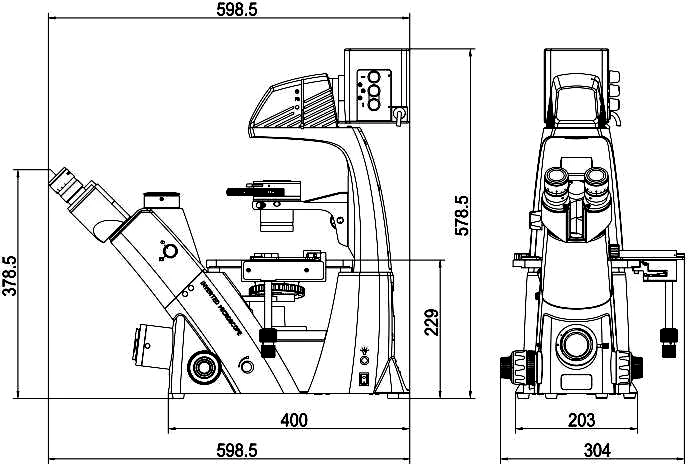
Inverted Fluorescence 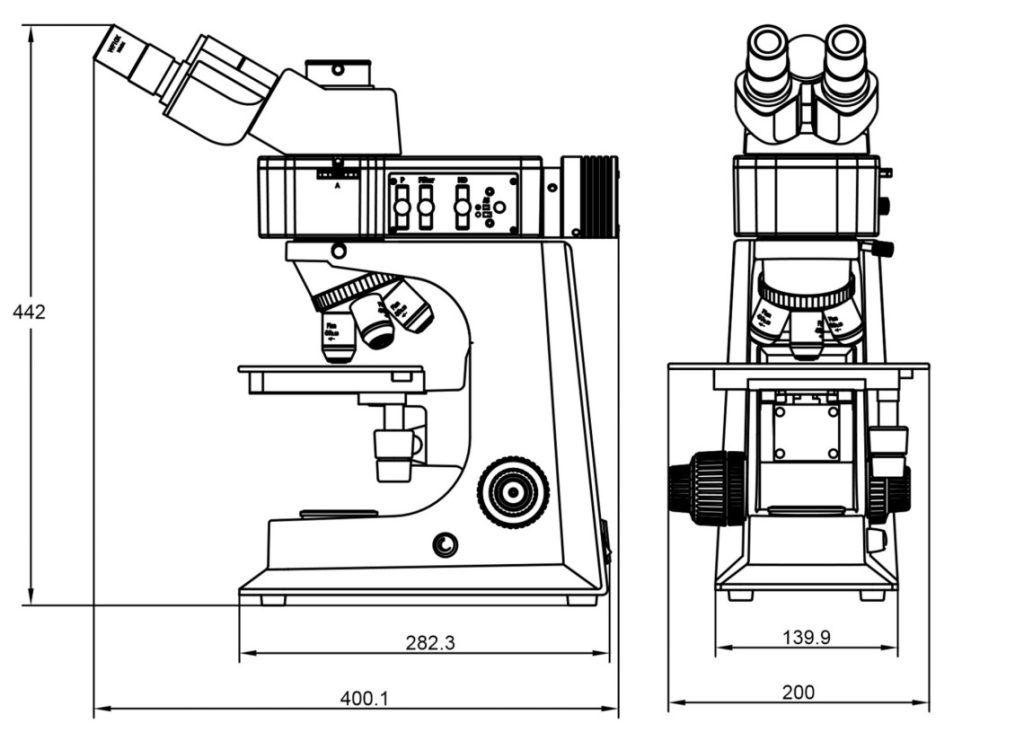
Metallurgical Microscope 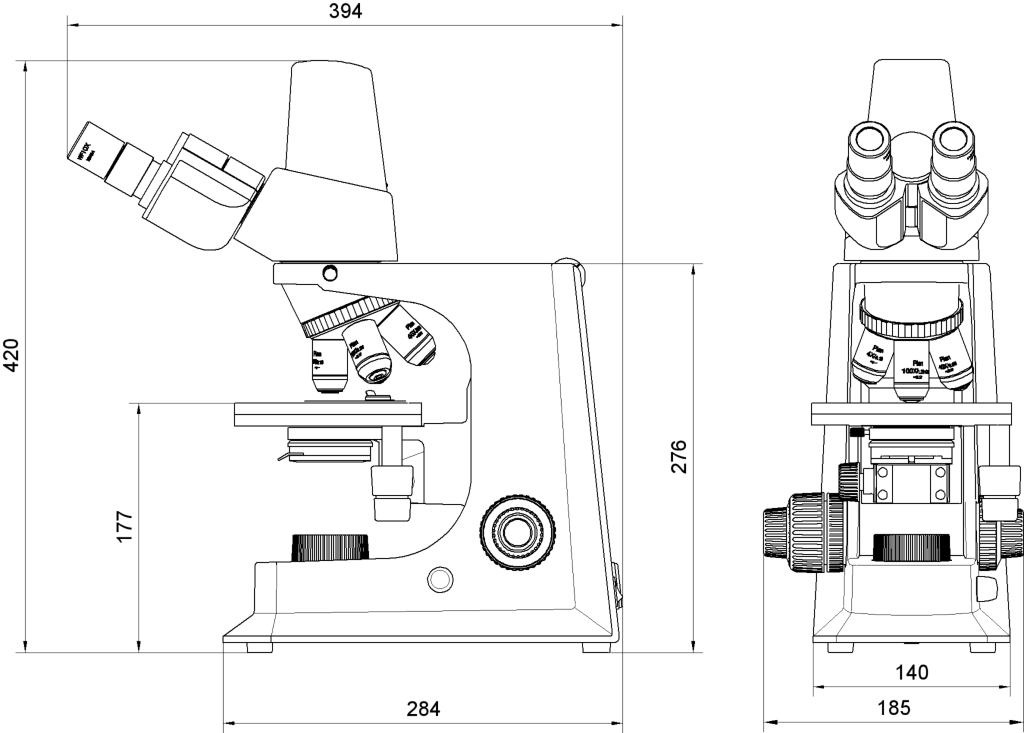
Digital Microscope
The compound microscope will be your best bet when investigating the microscopic world. With the use of various lenses, it can enlarge your specimen by a factor of 1000 times or even more.
- Ideal Uses: For blood cells, bacteria, and thin tissue sections.
- Sample Preparation: Must be carefully sectioned and stained onto glass slides.
- Illumination Type: Transmitted illumination, where light comes from below your specimen.
Insider’s Tip: Compound microscopes have such a narrow depth of field that you will be continually adjusting the fine focus knob to see each layer of the cell.
Types of Compound Microscopes
Depending on the complexity of your tasks, compound microscopes come in specialized variations:
- Fluorescence Microscopes: Illuminate samples stained with fluorescent dyes, perfect for molecular biology and medical diagnostics.
- Polarizing Microscopes: Analyze materials with unique refractive properties, ideal for geology and material science.
- Inverted Microscopes: View samples from underneath — great for live cell cultures in Petri dishes.
- Metallurgical Microscopes: Inspect the surfaces of metals using reflected light.
- Digital Microscopes: Capture and analyze images digitally, enhancing documentation and remote learning.
2. The Stereo Microscope: The 3D Workhorse
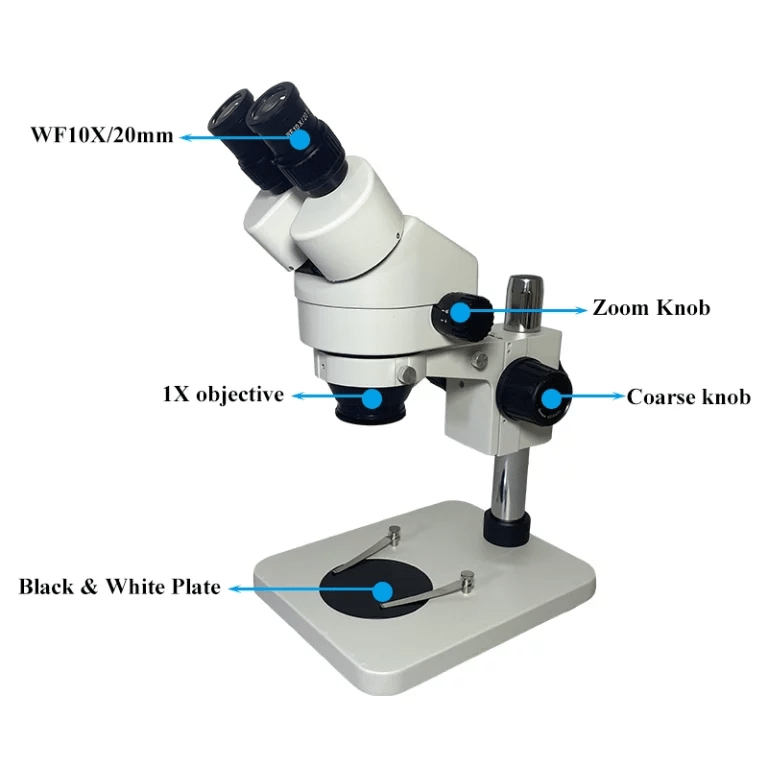
It is also referred to as a dissecting microscope. This type of microscope enables three-dimensional observation at low magnification (usually 10x–50x).
- Suitable for: insects, gems, printed circuits, and plants.
- Sample Preparation: Not needed; simply put your sample under the microscope.
- Source of Light: Reflected light (light coming from above to illuminate the sample’s surface).
- Advantages: It provides an “authentic” view. When you move the sample to the left, it appears on your screen, moving left as well.
Compound vs Stereo Microscopes: Which One Should You Need?
To make the final call, ask yourself these three questions:
What is the subject?
- If it’s transparent and microscopic (like pond water organisms), go Compound.
- If it’s solid and visible to the naked eye (like a bee), go Stereo.
Do you need to use tools?
If you are soldering electronics or dissecting a flower, you need the Stereo microscope’s “Working Distance” (the space between the lens and the object).
Is portability a factor?
Stereo microscopes are generally more rugged and easier to use “in the field” compared to the delicate setup required for compound slides.