- Standard microscopes are your window into the living world: simple, straightforward, and powerful.
- Polarizing microscopes? They’re the key to unlocking the hidden optical fingerprints of materials—professional, precise, and totally specialized.
That one replaces the other. Nope—they’re just two different tools, built for two totally different jobs.
Polarizing & Standard Microscope: What Exactly Are They?
Picture this: you’ve got two pairs of super special glasses in front of you. One lets you see what’s on the surface, and the other lets you peek into the inner workings—sound simple? That’s exactly the difference between these two microscopes.
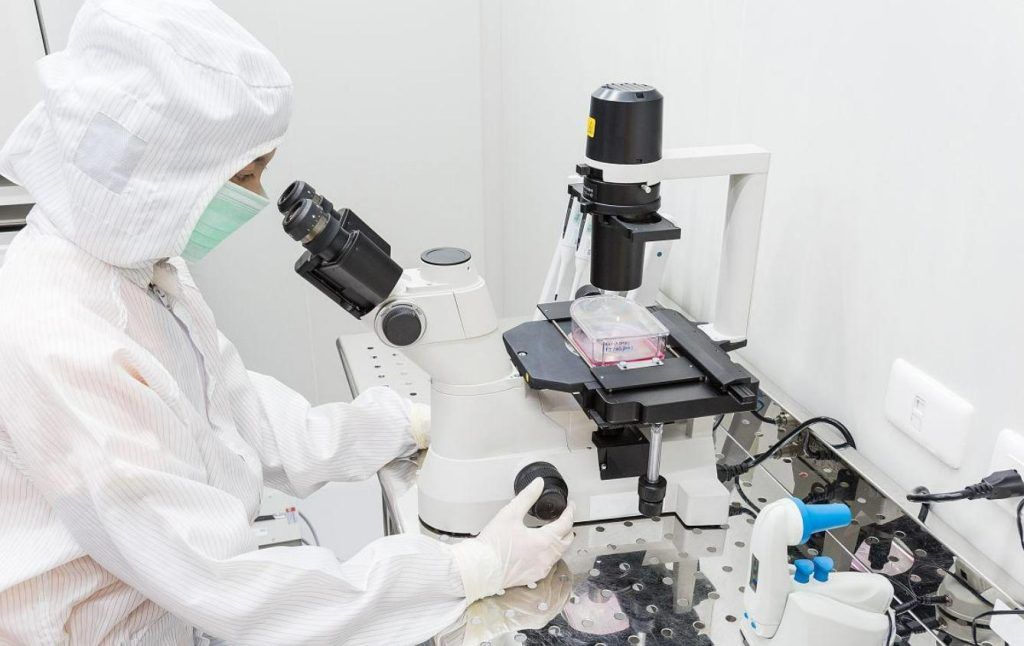
- Standard Microscope: The question it answers is simple: “What does this thing look like (on the outside/surface)?”
Think of it like a high-def magnifying glass on steroids. It shines light straight through your sample, so you can see every detail—cell shapes, colors, structures—clear as day. It’s like looking at a colorful photo on a sunny afternoon: rich details, true colors, no surprises.
- Polarizing Microscope: The question it answers? “What are the hidden optical properties of this thing (its inner secrets+)?”
This one’s like a magic pair of glasses. It adds two fancy filters (called a polarizer and analyzer) to the light path, and these filters only let light vibrate in one specific direction. When this “tamed” light passes through certain materials? It reveals a hidden world—vibrant colors, stripes, and patterns you’d never see otherwise.
Polarizing Microscope vs. Standard Microscope: Key Differences Explained
Difference in Working Principles: Totally Different “Watching Philosophies”
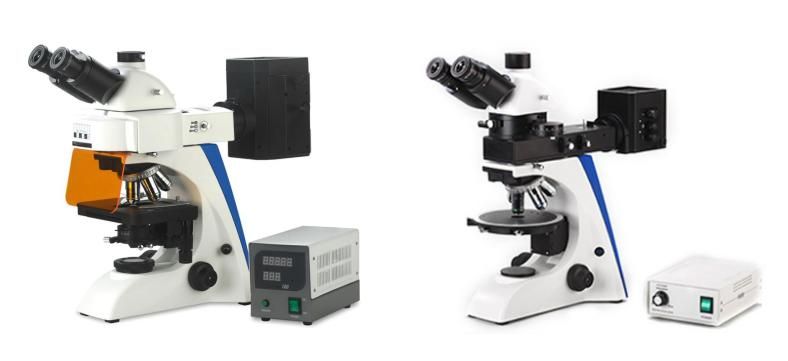
Imagine light is a crowd of people, all moving and vibrating in random directions. A standard microscope lets everyone pass through—no rules, no filters. A polarizing microscope? First, it sets up a gate (the polarizer) that only lets people vibrating “vertically” pass through. Then, the inner structure of your sample changes the direction these people are vibrating. Finally, another gate (the analyzer) only lets people vibrating “horizontally” pass through—so only the light that was changed by the sample makes it to your eye. That’s how it uncovers those hidden secrets.
- Standard microscopes play a “shadow game.” They create images by relying on how much light different parts of your sample absorb. A dyed cell nucleus looks dark because it soaks up more light; the cytoplasm looks light because it lets more light through.
- Polarizing microscopes? They play a “light magic trick.” They rely on your sample changing the direction of light vibration (called birefringence). When polarized light passes through crystals, fibers, or other anisotropic materials, the light splits and creates interference, which gives you those bright, vivid colors you can’t see with a standard scope.
What Do You Actually See?: Surface Appearance vs. Inner Secrets
Standard Microscope Results
You get straightforward images:
- Shape
- Color
- Basic structure
It’s like zooming in on a photo.Example: A cell looks like a round shape with a nucleus — clear but simple.
Polarizing Microscope Results
You see things that don’t exist in normal light:
- Bright interference colors
- Patterns and textures
- Crystal orientation
- Internal stress
It’s like switching from a black-and-white sketch to a hidden-color map.
Differences in Observation Targets: The Key Factor in Choosing the Right Microscope
This is the most important factor when choosing between the two—what you’re actually going to look at. I’ve put their “friends” (samples they work best with) into a simple table so you can scan it:
| Category | Standard Microscope – Typical Samples | Polarizing Microscope – Typical Samples |
| Biological samples | Biological cells and tissue sections | Collagen fibers (birefringent biological structures) |
| Microorganisms | Blood smears and microorganisms | — |
| Color-contrast samples | Any sample that can be stained or naturally shows color contrast | — |
| Everyday non-crystalline samples | Cells, bacteria, insects, plant leaves, textile fibers (when focusing on shape only) | — |
| Minerals and rocks | — | Rocks and minerals (core tool for geological identification) |
| Crystals and gemstones | — | Crystals and gemstones (used for identification and authenticity analysis) |
| Polymers and plastics | — | Polymers and plastic films (crystallization and fiber orientation analysis) |
| Liquid crystals | — | Liquid crystals (alignment analysis in display technology) |
| Chemical crystals | — | Chemical crystals (crystal growth, morphology, and polymorphism studies, critical in pharmaceuticals) |
| Forensic evidence | — | Tiny fibers, glass fragments, and soil minerals |
| Stress analysis | — | Internal stress visualization in transparent plastics or glass |
Do You Need a Polarizing Microscope for Your Samples?
Ask yourself these questions:
- Does your sample look “boring” under a normal microscope, but you suspect a complex structure?
- Is it crystalline, mineral-based, or synthetic material?
- Do you need information about optical or crystal properties?
If the answer is yes, a polarizing microscope is worth considering.
Difference in Precision & Analytical Capabilities
- Standard microscopes are great for seeing shape and basic structure—and that’s about it. You can’t analyze a crystal’s inner structure or check stress in a plastic part—they just don’t have the tools. They’re precise for what they do, but they’re not built for “deep dives” into analysis.
- Polarizing microscopes? They’re made for detailed analysis. You can tell the difference between two similar minerals, check for stress in plastic parts (stress that could make them break), and authenticate gemstones—all thanks to those polarizing filters and the details they reveal. They’re more precise for professional work, but if you don’t need that level of analysis, all that extra power is just overkill.
Polarizing Microscope vs. Standard Microscope: How to Choose & Application Recommendations?
| Your Scenario | Top Recommendation | Key Reason |
| University Biology Lab | Standard Microscope | Perfect for teaching and research—best value for money |
| Hospital Pathology Department | Standard Microscope | Gold standard tool for diagnosing dyed tissue sections |
| Geological Exploration Team | Polarizing Microscope | Only effective on-site tool for identifying minerals and rocks |
| Polymer Material R&D | Polarizing Microscope | Key tool for analyzing crystallization, orientation, and phase separation |
| Interdisciplinary Research Lab | Upgradable High-End Platform | Meets your main needs now, with flexibility to add polarizing, fluorescence, or other modules later |
“What Samples Am I Mostly Going to Observe?” (This Is the Deciding Factor)
Are you a biologist, pathologist, medical researcher, or student? Go with a standard microscope—no question. Its expandability (like upgrading to fluorescence or phase contrast) covers all your needs. Buying a polarizing microscope would be a total waste of money for you. Are you a geologist, materials scientist, crystallographer, polymer engineer, or forensic scientist? You need a polarizing microscope. It’s the standard tool in your field—the core of what you do. Even a top-of-the-line standard microscope can’t solve your problems.
“What’s My Budget, and Will I Expand My Research Areas in the Future?”
Polarizing microscopes are significantly more expensive than standard ones at the same level—they need strain-free optical parts and precision mechanical stages. If your budget is tight and your goals are clear, buy for your core needs (don’t overspend on features you’ll never use). If you’re a cross-disciplinary lab or think you’ll expand your work later, consider a modular microscope that can add a polarizing module—but keep in mind, this usually means a higher initial cost.