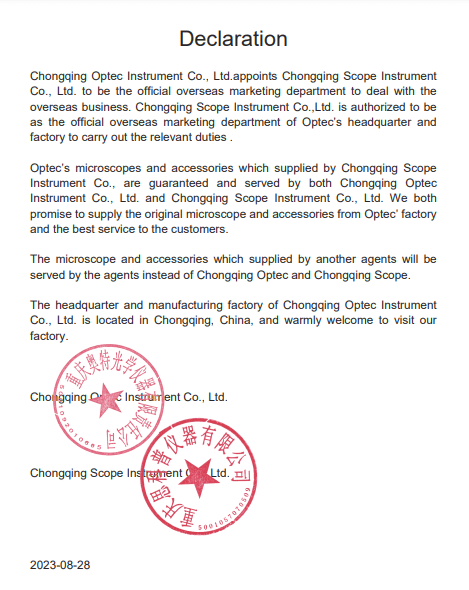

In today’s era of repairing PCBs, reworking SMD parts, and analyzing motherboards, a good digital microscope has turned out to be one of the most crucial tools that should be available at any workstation. So then what exactly qualifies a digital microscope for PCB soldering?
Irrespective of whether you are fixing smartphones, gaming consoles, control boards for industries, or any automotive electronic components and even assembling Surface-Mounted Technology boards, using a wrong microscope will affect your accuracy right from the start, causing undue strain on your eyes and possibly damaging sensitive circuitry too.
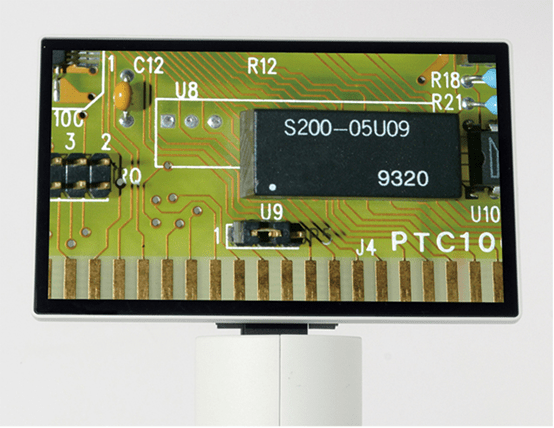
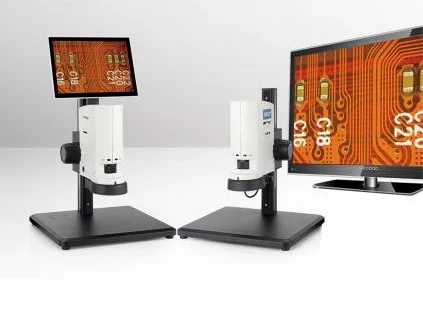
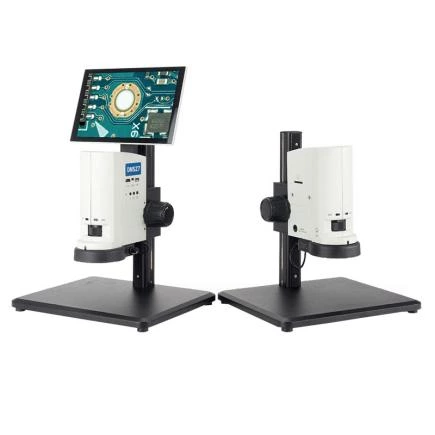
What Types of Digital Microscopes?
| Microscope Type | Core Configuration | Key Features | Best Applications |
| Standalone LCD Microscopes | Integrated 7 to 10-inch LCD screen; ready to use out of the box. | Highly compact, space-saving, and portable. | 1. Hobbyists with limited desk space 2. Quick, occasional soldering 3. Mobile field repairs |
| Industrial HDMI Camera Systems | Standalone industrial camera + C-mount zoom lens + external monitor. | Lag-free 1080P or 4K video output at 60 FPS; ultra-smooth real-time viewing. | 1.Professional repair shops 2. High-intensity micro-soldering |
| Integrated Laboratory Digital Microscopes | Traditional optical eyepieces + internally built-in digital imaging chip. | Retains unmatched 3D depth of field; allows seamless USB/HDMI connectivity to a PC. | 1. Image capture and dimensional measurement 2. Training and demonstrations 3. Advanced laboratory work |
What Crucial Factors for a PCB Soldering Microscope?
Soldering is a dynamic process heavily reliant on hand-eye coordination. A microscope that works perfectly for inspecting coins or insects might fail when faced with a smoking soldering iron. You must evaluate these four critical factors:
Ultra-Low Latency & High Frame Rate
This is the absolute dealbreaker for soldering under a camera. If the screen lags by even 50 milliseconds behind your iron’s real movement, you will constantly overshoot targets or burn pads. An HDMI 60 FPS setup connected directly to a monitor ensures a smooth, near-zero-latency experience.
Ample Working Distance
This means the physical clearance between the bottom of the lens and the PCB must be at least 10–15 cm (4–6 inches). Without this space, your soldering iron tip, hot air nozzle, and tweezers will have no room to maneuver.
Glare & Reflection Control
Shiny solder joints, PCB masks, and exposed copper act like mirrors. If the lighting is poorly designed, vertical light creates blinding “hot spots” (glare). Dual-sided gooseneck lights or lenses equipped with a polarizing filter are essential to eliminate these reflections.
Heavy-Duty, Flexible Stand
At high magnification, even a minor desk vibration from typing translates to an “earthquake” on screen. A heavy, solid-iron base or a multi-axis articulating boom arm stand locks out vibrations and provides the clearance needed to handle massive industrial boards.
Best Digital Microscope for PCB Soldering: Top Picks
Toy-Grade: Toy-Grade: Standalone Small LCD Microscopes — Best For Casual Repairs & Small BudgetsStandalone Small LCD Microscopes
- Best For: Casual repairs, minor wiring, and hobbyists on a tight budget.
- Typical Models: Standard 7-inch or 10-inch integrated screen microscopes.
- PCB Suitability: The main perks here are affordability and a compact footprint. With an integrated screen and lens, they are plug-and-play. However, since most rely on USB signal protocols, you might experience slight frame lag during precise micro-soldering (like jumper wires or BGA reballing). Their vertical stands also limit maneuvering space, making them better for trace inspection rather than heavy soldering work.
Intermediate: Component-Based Industrial HDMI Systems — Best For Repair Shops & Daily Bench Work
- Best For: Cellphone repair shops and daily high-frequency soldering benches.
- Typical Models: C-mount long-working-distance lenses + dedicated industrial cameras + external monitors.
- PCB Suitability: This is currently the most recommended pure digital workflow for the professional electronics repair industry. By bypassing the PC and routing raw 1080P/4K video at 60 FPS directly via HDMI to a monitor, it delivers true zero-latency hand-eye coordination. Paired with an articulating boom arm or flexible stand, it unlocks a massive 15cm+ working clearance, giving your hot air nozzles and iron tips complete freedom.
Professional Tier: Integrated Digital Stereo Microscopes — Best For Enterprise Labs & Chip-Level Advanced Rework
- Best For: R&D labs, advanced motherboard diagnostics, and chip-level micro-welding.
- The Ultimate PCB Workflow: If your tasks demand more than just standard iron work—such as deep motherboard diagnostics, BGA chip-level rework, or industrial-grade quality control—then an integrated digital video stereo microscope sits at the absolute pinnacle.
- Why It Wins for Advanced Electronics: It is a true “industrial powerhouse.” It masterfully bridges the “3D true depth of field” of traditional optical stereo scopes (vital for judging solder joint height and spotting floating components) with the screen-sharing and measurement strengths of a digital camera. It allows you to check for cold joints at a glance and use on-screen touch tools to draw and calculate measurements.
Industrial Spotlight (e.g., ScopeLab DMSZ7 Series): High-end integrated video stereo microscope series are explicitly optimized for electronic testing with features like:
- Fume-Resistant Optics: Soldering fumes and rosin vapors can easily ruin a lens. These premium models feature specialized anti-fog and anti-corrosion coatings, keeping the optics crystal clear even after daily exposure to smoke.
- Onboard Precision Measurement: No external PC tower is needed. Technicians can measure micron-level pads, pin pitches, and traces directly on the microscope screen and save the images with a single click—making it perfect for factory quality control.