Description
I. Introduction to the Full Airway Simulation Model
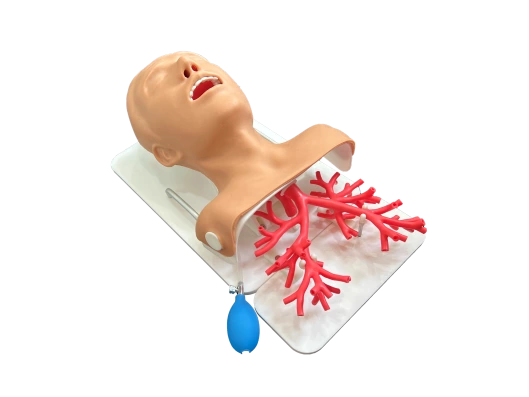
The full airway simulation model is a complete airway training model. It allows medical students to understand the anatomy and structure of the airway, learn airway management operations, experience the actual operation of laryngeal mask airways, laryngoscopy, bronchoscopy, and airway management, and obtain realistic visual and tactile sensations during surgery, enabling doctors to learn better and faster.
II. Surgical Training Procedures
1. Learning and understanding the entire airway structure
2. Training in laryngeal mask operation
3. Training in laryngoscopy operation
4. Training in bronchoscopy operation
5. Training in airway management operation
III. Parameters of the Complete Airway Simulation Model
1. Dimensions: 30*23.3*48.8CM
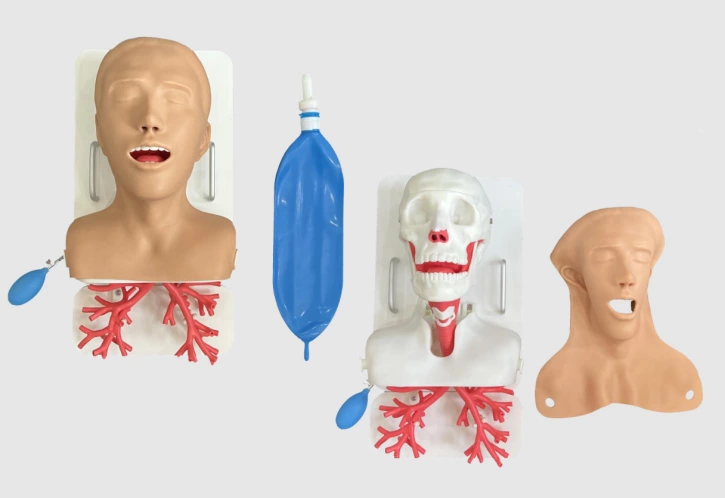
2. Adult physique appearance, based on real human image data, 1:1 scale realistic and complete human anatomical structure, 1:1 scale human organ cavity curvature and path, supine human model, maintaining the head in a neutral position. Includes physiological structures such as skin, skull, trachea, esophagus, bronchi, nose (nasal vestibule, superior, middle and inferior turbinates, superior, middle and inferior nasal meatuses, nasal septum, eustachian tube torus, eustachian tube orifice), mouth (lips, teeth, tongue, tongue root, hard palate, soft palate, uvula, palatopharyngeal arch, palatine tonsils), larynx (epiglottis, laryngeal orifice, vocal folds, pyriform fossa, esophageal orifice).
3. Features complete bronchial structures from level 1 to 5: main bronchus (level 1) → lobar bronchus (level 2) → segmental bronchus (levels 3-4) → small bronchus (level 5).
4. The internal airway structure is modeled based on a real human CT scan, including the complete nasal cavity, nasal septum, inferior turbinate, middle nose, uvula, tongue, perineum, pyriform fossa, slit, and glottis. A separate opening for the esophagus connects to the pyriform fossa, allowing for the placement of a gastric tube and a double-tube laryngeal mask airway.
5. The exterior features important head features such as the mouth, nose, eyes, eyebrows, ears, and hair. Openings are located at the corresponding positions of the mouth and nose for airway management.
6. Allows for simulated practice of clearing foreign objects from the airway.
7. The mandible is independently 3D printed, with the condyles of the mandible connected to the mandibular fossa of the temporal bone by highly elastic elastic bands. This accurately reproduces normal movements such as opening and closing the mouth, mandibular forward movement, and rebound, enabling the lifting of the mandible.
8. The outer skin is fixed to the bony structure of the model by locking points at the eye sockets and both shoulders, allowing for easy removal and replacement.
9. Some cervical vertebrae are independently 3D printed, enabling cervical joint movement. By adjusting the position of the posterior occipital bone limiter, the model can achieve neutral, tilted, and hyperextended neck positions. The mouth opening of the model also changes accordingly during these positional changes.
10. The respiratory tract structure is detachable and replaceable.
11. The trachea connects to the glottis, and the tracheal membranous portion and tracheal cartilage rings are realistically reproduced. The anterior surface of the trachea features bony landmarks of the thyroid and cricoid cartilages. By applying pressure to the cricoid cartilage, the airway position can be changed, the esophagus can be closed, and cricoid cartilage compression (Sellick technique) can be practiced.
12. An inflatable balloon is located inside the tongue. Inflation allows for easy reproduction of difficult airway conditions such as macroglossia and tongue swelling. Deflation is possible with a single button press.
13. The model surface uses a dust-proof process, making it easy to wipe and preventing dust from adhering.
14. The outer skin is the skin tone of a typical Chinese person, with a Shore hardness of 0HA. It has a certain thickness and toughness, effectively replicating the feel and elasticity of real human skin and tissue.
15. The internal airway material simulates the color of real human tissue, being red, with a Shore hardness of 10HA. It also effectively replicates the feel and elasticity of real human tissue.
The bronchus is molded as a single piece, mimicking the color of real human tissue (red) with a Shore hardness of 50±2HA.
16. The skin, airway, and bronchi are made of a specially formulated platinum-silicone biomimetic material, characterized by safety, non-toxicity, environmental friendliness, and odorlessness; it can be marked for positioning and wiped multiple times; it allows for puncture, cutting, suturing, and cannulation. Subcutaneous surgical procedures provide a realistic feel.
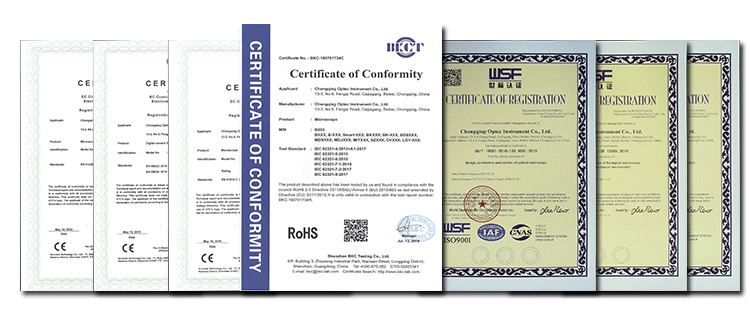
17. RoHS official non-toxic testing certificate is available.
18. The bony parts of the model are modeled entirely according to the normal human head and facial skeletal structure and 3D printed. The nasal cartilage is independently 3D printed for shaping the bridge of the nose.
19. Laryngeal mask airway, laryngoscope, and bronchoscope can all be used for training.
20. It can be used to understand the anatomy and structure of the entire respiratory tract and to learn and experience the actual operation of laryngeal mask airway, laryngoscope, and bronchoscope.
21. Supports both nasal and oral insertion methods for endotracheal intubation practice. Lubricant is required; apply medical lubricant to the instrument for easy airway access.
22. Supports external laryngeal manipulation, cricoid cartilage compression (Sellick technique), cricothyroid membrane localization, and puncture.
23. Both flexible and rigid endoscopes can be used for training.
IV. Basic Configuration Requirements
1. Full airway simulation model *1
2. Fixing base *1
| Why Choose Us?
SC-LV40 medical training ear washing manikin for ear syringing has relatively specific functions and is a good simulator for training medical staff’s ear canal irrigation skills. The service life of the product is relatively long, and it can be trained many times without deformation. We all provide a one-year after-sales guarantee service, and technicians will solve after-sales problems for customers online. Our price is moderate, and we will customize logos for customers according to their needs. There will be no additional charge for domestic shipping.
| Order Process
- After confirming the product quantity and shipping method, pay according to the contract.
- After we receive the payment, we will place an order with the factory for production.
- The product is produced and packaged, and shipped by the agreed mode of transportation.
- Confirm the customs clearance documents and product delivery pictures with the customer.

| Company
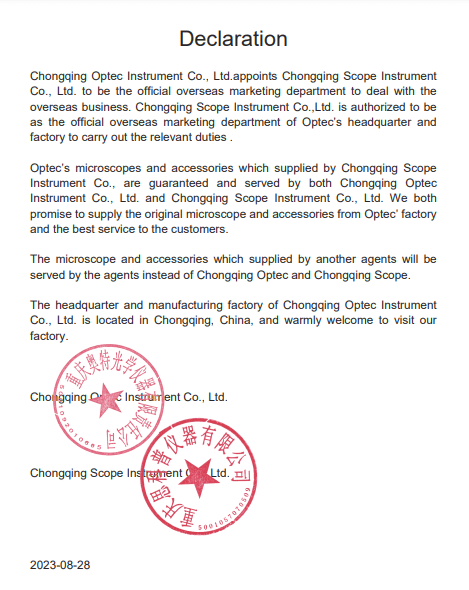
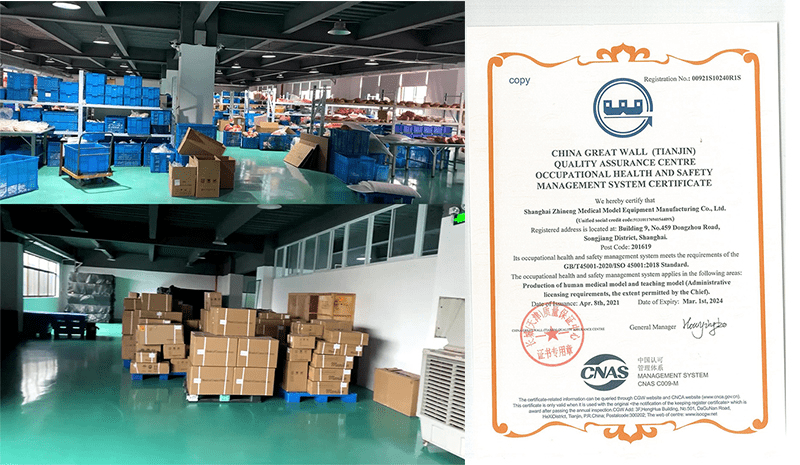
Chongqing Scope was established in Chongqing in 2019. The main business scope is the export of laboratory products. Our sales staff are all experienced employees, we have our own dedicated microscope factory, and products can be customized according to requirements. We also provide other laboratory consumables, metallographic equipment, medical simulators, etc. Our customers are located in more than 30 countries and regions all over the world, and we get a lot of good feedback. Our company has various certificate qualifications, ISO9001, ISO14001, CE, UKCA, ISO45001, ISO13485, etc.